
Accelerated Resolution Therapy in Tampa, Florida

    A gentle, effective approach to processing trauma and distressing memories without requiring repeated verbal retelling.

    Ancient stone carvings

    What is ART?

    Accelerated Resolution Therapy (ART) is an evidence-based therapeutic approach that helps people process traumatic memories and distressing life experiences. It combines elements of several established therapies with a unique protocol that allows for rapid resolution.

    ART uses voluntary memory visualization along with lateral eye movements to help the brain reprocess traumatic memories. What makes it distinctive is that it allows for significant change without requiring detailed verbal recounting of traumatic events.

    The approach is trauma-informed at its core, prioritizing your sense of safety and control throughout the process.
    Timeless beauty

    How ART works

    01

    Memory Visualization

    You bring a distressing memory to mind, but in a controlled, supported way. You stay in charge of what you share verbally.

    02

    Eye Movements

    While holding the memory, you follow guided lateral eye movements that appear to help the brain reprocess the experience.

    03

    Resolution

    The emotional charge of the memory shifts, often significantly, allowing you to recall it without the same distress.

    ART and EMDR: Understanding the difference

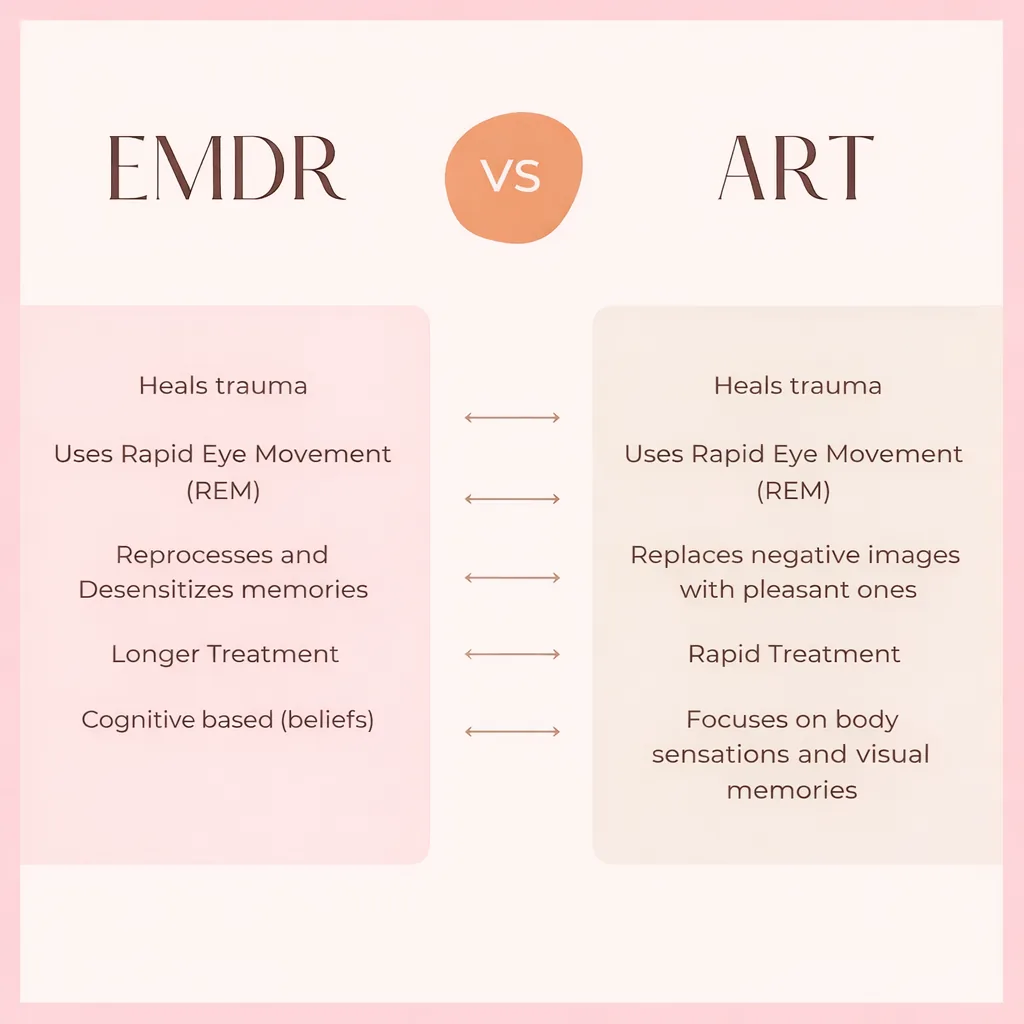
    Both ART and EMDR (Eye Movement Desensitization and Reprocessing) are evidence-based approaches that use eye movements to help process trauma. Many people have heard of EMDR and wonder how ART compares.

    While both are effective, they have different protocols and experiences:

    ART

    • —Often resolves issues in 1-5 sessions
    • —Does not require verbal retelling of trauma
    • —Tends to be less emotionally activating
    • —Uses voluntary imagery replacement
    • —Focus on rapid resolution and nervous system settling

    EMDR

    • —Typically requires more sessions
    • —Often involves verbal processing of memories
    • —May bring up more intense emotions during processing
    • —Well-established with decades of research
    • —Widely available and recognized

    Neither approach is "better"—they're simply different options. Some people find ART's gentler, faster approach more accessible, particularly if they're hesitant about extensively discussing traumatic experiences. Others may prefer or benefit from EMDR's established protocol.

    ART may be a good fit if you

    —

    Want to process trauma without repeated verbal retelling

    —

    Have tried talk therapy and feel stuck

    —

    Are looking for a gentler approach to trauma work

    —

    Want depth without reactivation

    —

    Prefer a structured, goal-oriented approach

    Interested in learning more?

    ART is usually one part of a larger process. It lives inside my individual therapy work in Florida, and can be woven into couples therapy when old wounds keep showing up in the relationship. My clinical approach explains why I work this way.

    Get in touch